How to Play Block Escape Puzzles: Sliding Blocks, Explained
The rules of sliding block escape puzzles: how pieces move, what counts as solved, and the two habits that stop beginners getting stuck on level one.
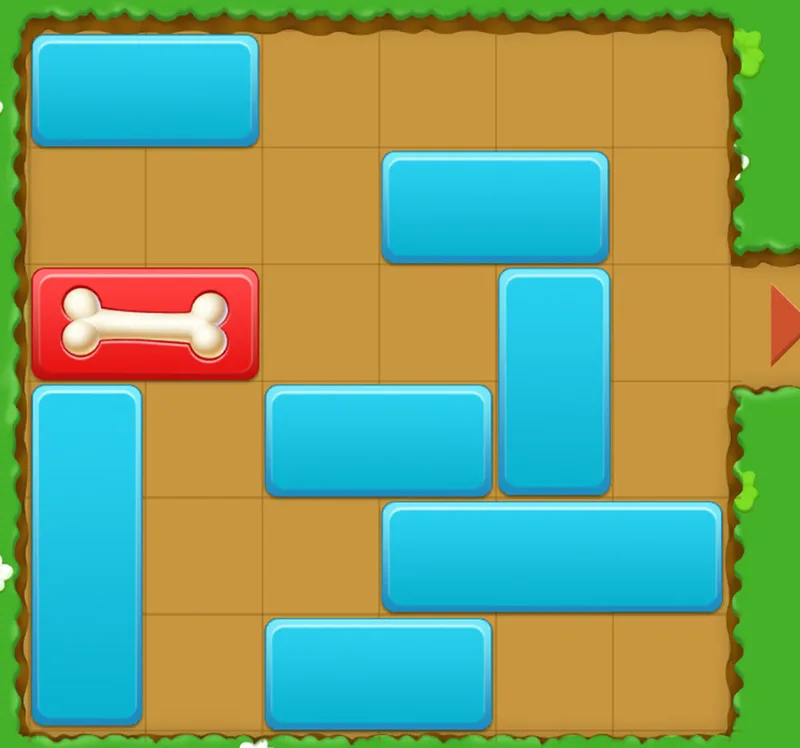
A block escape puzzle gives you a crowded grid and one piece that needs to get out. Nothing is hidden and nothing is random. Every level is fully solvable from the moment it loads, and the only thing standing between you and the solution is move order.
Blocks slide. They never rotate.
This is the rule the whole genre is built on, and it's the one new players fight hardest.
Each block moves only along its own length. A block lying horizontally slides left and right; a block standing vertically slides up and down. You cannot turn a piece, lift it over another, or shuffle it sideways out of its lane. A horizontal block stuck in a row full of other pieces is stuck until something in that row moves.
So the board isn't a grid of squares. It's a set of lanes, and every block belongs to exactly one of them.
What "solved" means depends on the variant
Two versions dominate, and mixing them up will make a level look impossible.
Single-target escape. One special piece has to reach the exit: in Block Escape: Relax Toy, the red block carrying a bone. Every other block on the board exists purely to be in the way. Once the target is out, the level ends, and it doesn't matter how tangled the rest of the board still is.
Clear-the-board escape. Every block has to leave, each through a matching exit. Block Slide: Color Master does this with coloured doors on the edges of the grid: a blue block only leaves through the blue door. Nothing on the board is filler, because each piece is both an obstacle and a goal.
Check which one you're playing before you plan anything. In the first, a block parked in a corner is a solved problem. In the second, it's a problem you've deferred.
Read the board before you touch it
The instinct is to start pushing the target piece toward the exit. That's usually the last move, not the first.
Work backwards instead:
- Find the exit and the lane that leads to it. In a single-target level, the target's own row or column is the escape lane.
- Count what's sitting in that lane. Those are the blocks you need to move. Everything else on the board is only relevant if it's blocking one of them.
- For each blocker, ask which way it can go (up or down, left or right) and what's currently stopping it.
That third question is what turns a level into a small chain: to move A you must first move B, and B needs space that only C can free. Most levels are three or four links long. Reading the chain before your first tap is the difference between solving a board and shuffling it.
The mistake almost everyone makes early
Moving pieces to wherever there's room.
Empty space on these boards is the resource, and it's scarce. Sliding a long block into the middle of the grid because there was a gap there will typically split the free space into two useless halves, and a long piece needs contiguous room to travel, not a gap here and a gap there.
Before any move, ask what that move does to the empty space. Pushing a blocker to the edge of the board keeps the middle open. Pushing it to the middle keeps nothing open.
Use undo freely, hints sparingly
Undo costs nothing and these puzzles have no timer, so treat the board as a place to test a chain rather than commit to one. If two moves in you can see the lane isn't clearing, back out and try the other direction on the first blocker; usually one of the two works and the other doesn't.
Hints are different. They solve the step you're on and teach you nothing about the step after it, so a hint used at the first sign of friction becomes a habit fast. Try reading the chain yourself first; the reading is the skill the later levels charge you for.
Where it gets harder
Once the rules are second nature, the difficulty shifts from can I see the path to am I opening the right space in the right order. That's covered in block escape puzzle tips.
Play these games
Block Escape: Relax Toy
A fun and addictive puzzle game that will challenge your brain and keep you entertained.
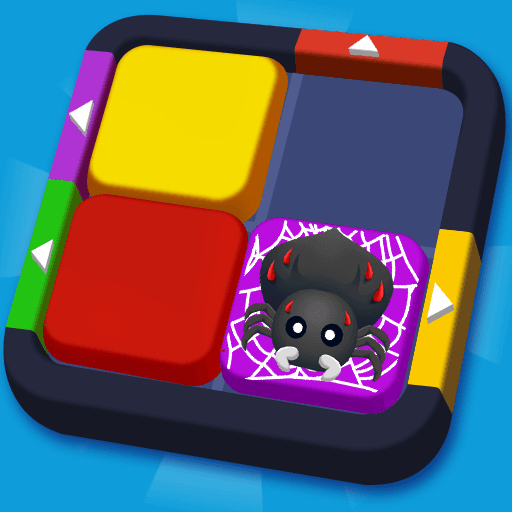
Block Slide: Color Master
🎨 Welcome to the Happiest Block Puzzle! Fun slide puzzle with cheerful vibes!